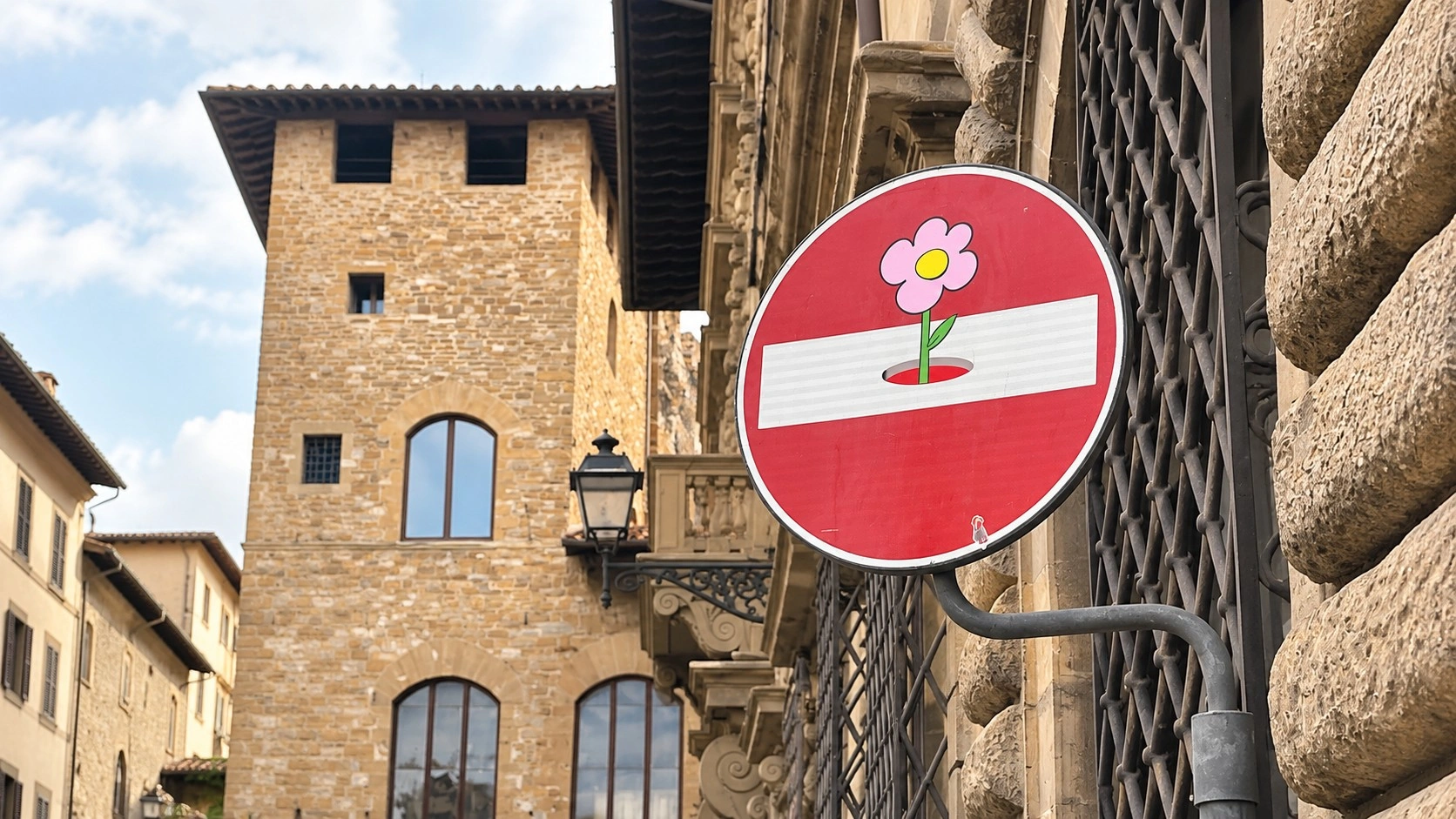
Clet Abraham in Florence is something you may discover without even looking for it. Among the Renaissance masterpieces, historic palaces and busy streets, playful works of street art are hiding in plain sight on ordinary traffic signs.
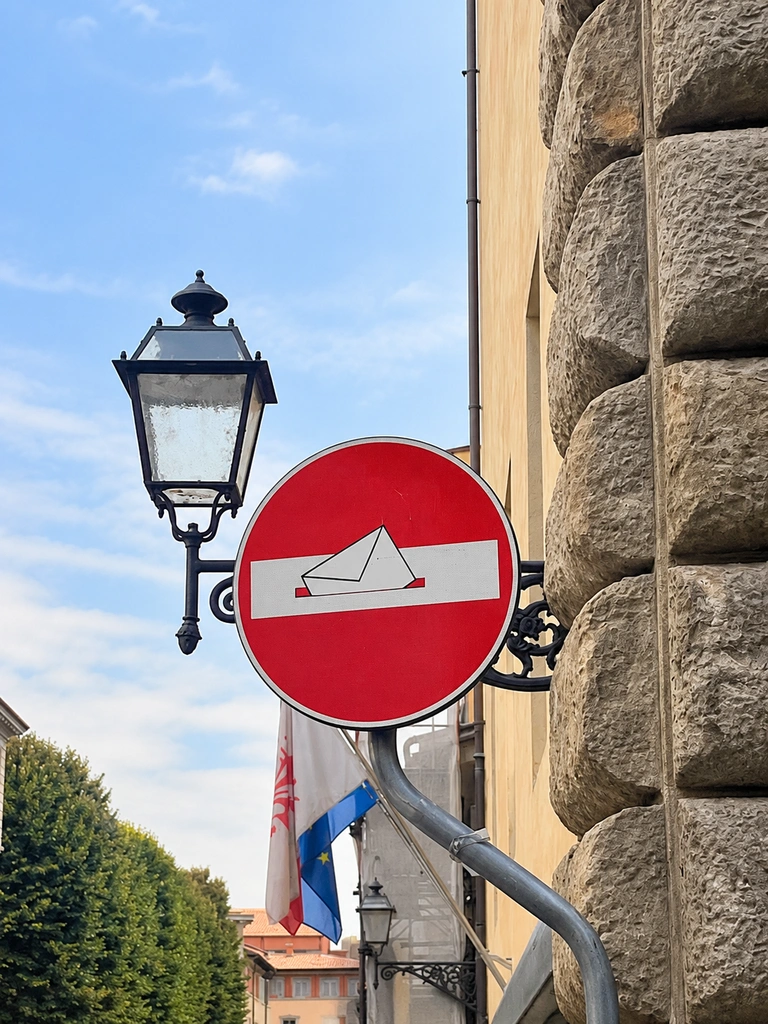
A flower growing through a no-entry sign, an envelope being posted through the white bar, or a tiny figure climbing over it. Once you notice your first Clet, you will probably start looking for them everywhere.
Who is Clet Abraham?
Clet Abraham was born in Brittany, France, and studied at the Academy of Fine Arts in Rennes. After moving to Italy, he eventually settled in Florence, where he has become closely associated with the San Niccolò neighbourhood, just below Piazzale Michelangelo.
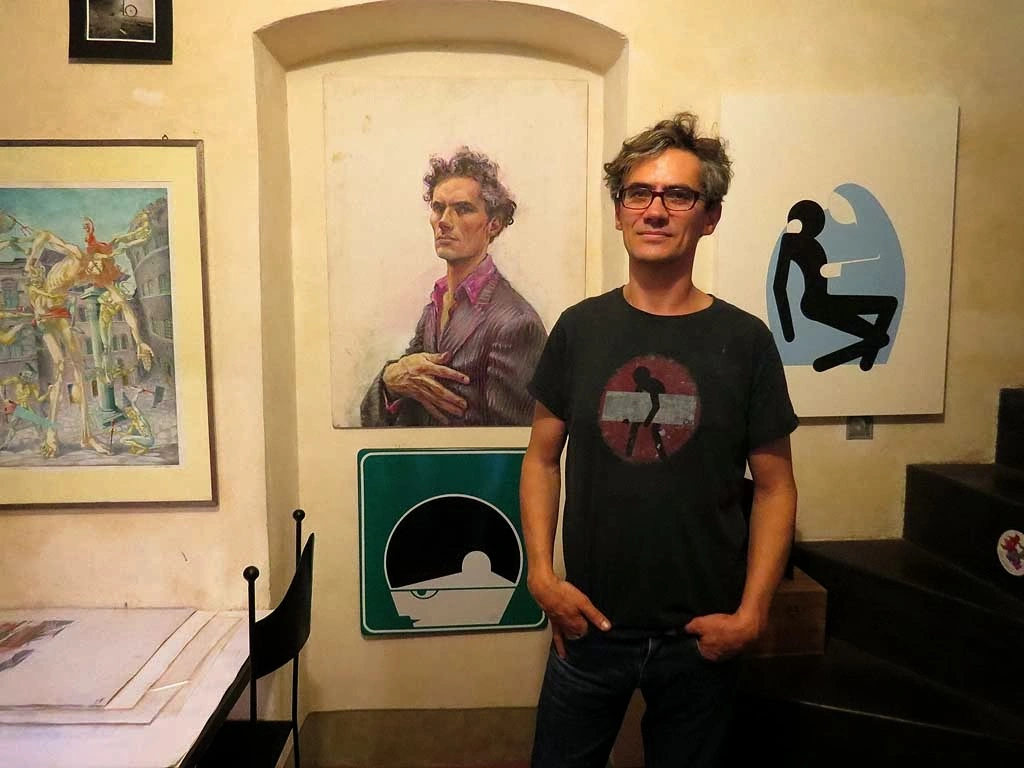
Clet Abraham in his Florence studio. Photo: LivornoDP / Wikimedia Commons, CC BY-SA 3.0
He became known for transforming ordinary traffic signs with removable stickers. By using the existing shapes and symbols, Clet turns something we normally pass without noticing into a tiny work of art. His creations can be funny, poetic or provocative and sometimes all three at once.
Clet Abraham and the traffic signs of Florence
What makes Clet’s street art so much fun is its simplicity. He uses the shapes that are already there and gives them a completely new meaning. A no-entry sign suddenly has a flower growing through it, becomes a letterbox or even a little scene with a person trying to climb over the white bar.
His stickers are designed so that the original traffic sign remains recognisable. You can find his playful signs throughout Florence, and spotting them while wandering through the city becomes a little treasure hunt of its own.
When a medieval tower suddenly grew a nose
Clet’s work in Florence has not always been limited to traffic signs. In June 2012, the medieval Torre di San Niccolò was given a rather unexpected new feature: an enormous nose.
The installation was part of a project promoted by the City of Florence together with the Comitato di San Niccolò and Clet. Using the existing openings of the tower as part of a giant face, the centuries-old landmark was transformed into something playful and surprising.
The nose was intended to be temporary, but its removal later became a point of disagreement. It is an interesting example of Clet’s sometimes complicated relationship with Florence: his unconventional art can be embraced by the city one moment and become the subject of debate the next.
L’Uomo Comune, a step into the unknown
One of Clet’s best-known works in Florence is L’Uomo Comune “The Common Man”. In 2011, the small figure appeared on Ponte alle Grazie, seemingly taking a daring step from the bridge into the open air above the Arno.
The little man represents an ordinary person taking a step into the unknown. It is a simple but powerful image: sometimes we have to move forward without knowing exactly what will happen next.
The sculpture has had a turbulent history. It was removed and returned more than once, becoming one of Clet’s most recognisable works in Florence and another example of the ongoing discussion surrounding his art in public spaces.
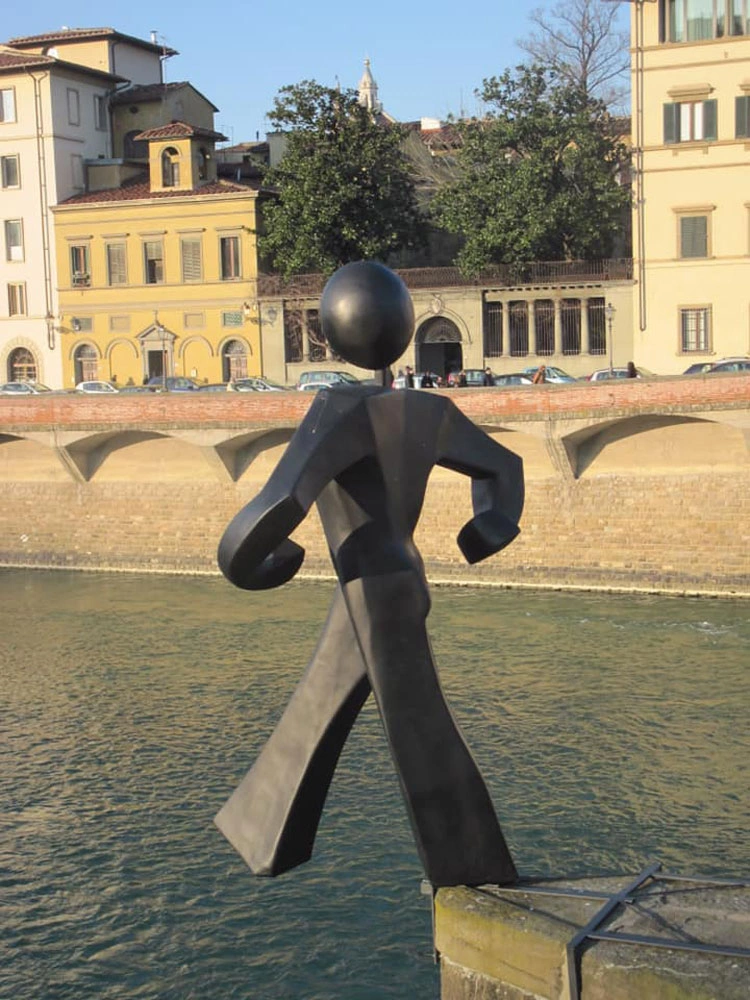
L’Uomo Comune by Clet Abraham, Florence. Photo: Giovanni Chiaie / Wikimedia Commons, CC BY-SA 4.0
Art or vandalism?
And this is where Clet’s story becomes particularly interesting. His playful traffic signs are photographed and enjoyed by visitors from all over the world, but many of his interventions in public spaces were created without permission. Over the years, this has led to signs being restored, fines and disagreements with the authorities.
Clet sees his work differently. His stickers are designed to leave the original meaning of the traffic signs visible and can be removed without permanently altering the signs. For him, they are a way of bringing humour, imagination and a little surprise into everyday city life.
Perhaps the most surprising twist is that Clet has now become part of Florence’s contemporary identity. The city’s official tourism website even features an itinerary dedicated to discovering Clet and his work around Florence.
Discover Clet Abraham in Florence
Florence is a city you can visit again and again and still discover something new. Next time you are walking through its historic streets, look beyond the famous palaces, churches and museums. Keep an eye on the traffic signs too, you may suddenly spot one of Clet’s playful creations.
You can even turn it into a little treasure hunt: who will be the first to find a Clet? And if you would like to see where it all began, Clet’s studio can be found in the San Niccolò neighbourhood, not far from Piazzale Michelangelo.
Staying in one off our holidayhomes at BonoVivo? Florence makes a wonderful day trip from our holiday homes in the Tuscan countryside. After a day among Renaissance masterpieces, hidden street art and lively Florentine streets, you can return to the peace and quiet of the Tuscan hills.